Wisdom Teeth Emergencies: Causes and Treatment

November 6th, 2013

When you think of a dental emergency, you may picture teeth that have fallen out or severe tooth pain. But it is not uncommon for wisdom teeth to develop conditions or problems that require urgent care from Dr. Kirk Fishbaugh and our team at Kirk Fishbaugh Dentistry. Wisdom teeth are the third set of molars that erupt in the late teen years to early 20s. Spacing and crowding problems often cause impaction and infections, which is why many people elect to have their wisdom teeth removed. If you are experiencing discomfort or pain related to your wisdom teeth, call our office to schedule a wisdom teeth consultation.

Perisoronitis and Infections?

You may develop perisoronitis if you have a partially-erupted wisdom tooth that has become inflamed. Often, inflammation is caused by food lodged beneath the gum. Here at Kirk Fishbaugh Dentistry, we can gently search for and remove food debris, as well as clean the affected area and treat it with antibiotics. Do not avoid treatment, however, as untreated perisoronitis can lead to infection, which ultimately places your health at risk.

Crowding and Impaction?

When your wisdom teeth erupt, they may cause overcrowding of your teeth, which can have a negative effect on their alignment. This can make it harder for you to clean your teeth properly, and it also increases the chances for developing tooth decay and other oral health problems in the future. For some people, the wisdom teeth never erupt, becoming impacted beneath the gum and causing problems with the neighboring teeth.

If you have an impaction or wisdom tooth crowding, make an appointment with our office soon. We will be happy to evaluate the progress of your wisdom teeth, as well as their effect on the rest of your jaw. Depending on our analysis, we will then discuss your options for treatment and whether extraction might be right for you.

Complications from Wisdom Tooth Extraction?

If you have recently had your wisdom teeth extracted, blood clots will have formed in the open sockets the teeth previously occupied. In most cases, the gums heal normally, assuming you follow post-surgical care instructions.. However, a small percentage of wisdom tooth extractions do not heal according to plan. If you continue to experience pain or other unusual symptoms following a wisdom tooth extraction, please give us a call. We’ll do everything we can to minimize discomfort and help you heal safely and quickly.

Remember, our team is here to support your dental health in every capacity. We are dedicated to providing excellent service before, during, and after all wisdom tooth procedures, so you can rest assured that your oral health is in good hands.
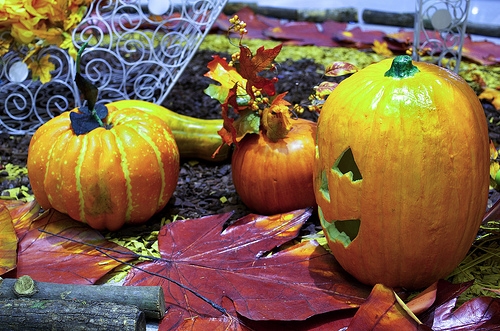

Halloween - Candy, Costumes, and More!

October 30th, 2013

All Hallows' Eve, more commonly known as Halloween, is a yearly event celebrated on October 31, and one that is anticipated by the young and young at heart all over the world. Some scholars claim that Halloween originated from Celtic festivals that honored the dead or that celebrated the harvest, while others doubt that there's any connection at all to Samhain (a Gaelic harvest festival.) Regardless of its origin, our team at the dental office of Dr. Kirk Fishbaugh hope that Halloween is fun and enjoyed by all of our awesome patients!

Trick or Treat?

In North America, Halloween is predominantly celebrated by children who dress up in costumes, which range from scary to cute, who then go around the neighborhood knocking on doors asking "trick or treat", and they are given candy in return. Trick-or-treating is a time honored tradition, and though many parents groan at the pounds and pounds of candy collected by youngsters and fear for the health of their teeth, there are a few things you can do to help their teeth stay in great shape until the candy is gone:

  • Limit the amount of candy they can consume each day
  • Have them brush their teeth after eating candy
  • Avoid hard, chewy candies as they can stick in hard to brush places
  • Keep candy out of sight to reduce temptation
  • Don't buy candy too far in advance to limit pre-Halloween consumption
  • Help or encourage your children to floss

Halloween Fun

Halloween isn't just about gorging on candy; there are other events associated with this festive day including carving jack-o'-lanterns, painting pumpkins, decorating sugar cookies, bobbing for apples, going to haunted houses, or just curling up on the couch with a bowl full of popcorn and watching some classic, scary movies.

Halloween Around the World

Some countries, like Australia, frown upon Halloween, claiming it is an American event and not based in Australian culture, while others like Italy have embraced the fun and celebrate much as Canadians and Americans do. Mexicans have been celebrating this fun day since around 1960, and it marks the beginning of the Day of the Dead festival. Some countries in Europe have come late to the party, but since the 1990s, countries like Sweden, Norway, and Germany have started celebrating Halloween as well, and finding children in costumes or having ghosts hanging in windows has become commonplace.

Halloween is about fun; stepping outside our normal lives and donning a costume or gathering with friends to knock on doors and ask for candy is as much a part of our culture as hot dogs and barbecue on Labor Day. Have a safe and happy Halloween from the team at Kirk Fishbaugh Dentistry!

How Tooth-Colored Fillings Improve Your Smile

October 23rd, 2013

Today’s crowns, veneers, and tooth colored fillings are very natural looking compared to early counterparts. There was a time when dentists placed silver fillings exclusively. This material is still used, however the most common material used today in fillings is composite, tooth-colored fillings. Composite fillings can be made to match any shade of tooth and even let light travel through them like natural enamel.

Composite fillings are great in many different scenarios. The most obvious reason is when a cavity is present. This is an excellent way to seemingly erase the imperfection that once was. It is almost as if the cavity was never there.

Placing composite fillings to reshape teeth can also minimize excessive spacing. In the case of a diastema, (a large space between the two front teeth) composite material is a non-invasive and cost-effective choice that provides instant results. It can be an alternative to braces.

Mottled enamel is a symptom of fluorosis, which causes discoloration and imperfections in the enamel. Composites are the material of choice for masking this condition.

Composite fillings are easy to place, easy on the eyes, and easily repaired. With skill and good composite material, a filling can be easily disguised. This look is desired most in our society today, where dental perfection is now standard.

In conclusion, your smile is in good hands with composite fillings. There are some great materials that give a near perfect match to the appearance of natural tooth enamel. Smile with confidence knowing no one ever has to know. Your secret is safe with us at Kirk Fishbaugh Dentistry!

What are Dental Crowns?

October 16th, 2013

A dental crown is often called a “cap.” A dental crown covers all of the visible parts of the tooth and has many functions and reasons for placement.

There are several different types of crowns available at Kirk Fishbaugh Dentistry. They vary in their material, appearance, and functionality. A PFM, or porcelain fused to high-noble metal, is the most common. A full cast, high noble metal crown is a gold crown, and a stainless-steel crown is meant to be temporary. The most natural-looking crown is one that is all porcelain. These are often used for front teeth.

Getting a crown typically requires two appointments. The first is a preparation with impressions, shaping, and placing a temporary. The impressions are either sent to a dental lab, where the process generally takes two weeks, or done in-office with a machine that can make a crown without needing a second appointment. These crowns are made from a high-quality solid block of porcelain. The shape of the tooth is constructed from a digital 3D image of your tooth.

To accurately determine which type of crown is best, you must first know why you need the crown and in what area of your mouth is it needed, which can be answered when you visit us at Kirk Fishbaugh Dentistry. For instance, if you have a gold crown on the lower right and need a new crown directly above on the upper right, the best durability and long-lasting relationship is another gold crown.

If you need a crown on a front tooth, a gold crown may not be the best choice. A PFM has strength but is not ideal, as a dark line will appear at the gum line. A full porcelain crown is going to look as close to a natural tooth as possible, but will have less strength than a gold crown.

There are two types of porcelain crowns, depending on how they are made. A dental lab makes a full porcelain crown by baking layer upon layer to make the porcelain look like natural enamel. A full porcelain crown made in-office out of a solid piece of porcelain will have increased strength. However, the natural layered appearance is extremely difficult to achieve.

A crown is placed on a tooth when added strength is needed. Cracks, large broken-down fillings, or previous root canal treatment are all conditions where a crown is the standard care. The type of crown that is most appropriate depends greatly on location.

Back to Top