Sleep Apnea and Snoring

August 14th, 2013
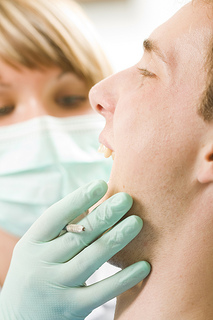
Snoring may not be something you take seriously. You might even laugh or joke about it. But the fact is, anytime you or your partner snore to the point of waking, it could be a sign of serious health problems.

Sleep Apnea and Its Effects

Sleep apnea is a sleep disorder that is potentially dangerous, and the most common symptom is loud snoring. Breathing repeatedly starts and stops throughout the night, and you wake up feeling tired. Other serious effects from sleep apnea could be potentially dangerous to your health if left unaddressed.

Besides losing a good night's sleep, you may experience difficulty concentrating. Depression, risk of heart attack, irritability, high blood pressure, memory loss, sexual dysfunction, and chances of stroke all increase when sleep apnea is not treated.

Sleep apnea occurs when the muscles in the back of the throat relax to the point of inhibiting natural breathing. The muscles used to support the soft palate relax and the airway closes, causing breathing to stop for ten to 20 seconds. This lowers the oxygen level in the brain. As the brain senses the inhibited oxygen levels it rouses the sleeper awake so the airway can reopen. Normally, the reawakening is so brief the person won't remember it.

If you think you may have sleep apnea, visit our Green Bay, WI office and let Dr. Kirk Fishbaugh determine what treatment is needed. Without it, you could risk losing more than a restful night's sleep.

Prevention and Treatment

Anyone can develop sleep apnea, but it is more common among middle-aged adults who are overweight. Dr. Kirk Fishbaugh can help you determine the cause and suggest positive treatment.

A common treatment for apnea is the placement of oral devices that are designed to help keep the airway open. By bringing the jaw forward, the device opens the airway and thereby discourages snoring. We are experienced in sleep apnea appliances, and Dr. Kirk Fishbaugh can prescribe a fitted device and monitor its success with follow-up therapy.

A continuous positive airway pressure mask, known as a CPAP, is among the other treatment options. A mask is fitted over the mouth and forces oxygen through the throat while you sleep. The pressure holds the soft tissue and throat muscles open.

Our professionals at Kirk Fishbaugh Dentistry can advise you of other ways to prevent sleep apnea, including weight loss, avoiding alcohol, or alternative sleeping positions. We can help you sleep return to easy sleep, knowing you are safer and healthier during your resting hours.

Telltale Signs That Your Tooth Has A Cavity

August 7th, 2013

Dr. Kirk Fishbaugh and our team at Kirk Fishbaugh Dentistry frequently get questions about cavity causes and prevention. You brush twice a day and floss regularly. You rinse with hydrogen peroxide, just like the dentist recommended. In fact, you can’t remember the last time you had a cavity, but you think it was when you were a little kid. In all seriousness, you thought only kids got cavities.

The Signs and Symptoms of a Cavity

It’s believed that roughly 90% of Americans will get at least one cavity in their lifetime. Those other ten percent, it seems, can eat as much pie, cake, and sugary cereals and sweets as they want. That’s not really true; just a stab at dental humor, and it was as bad as the pain your cavity is probably giving you.

When a cavity is in its initial stages, you will often be symptom-free and experience no discomfort at all. It’s not until the tooth decay has reached a certain level that you will begin to notice the signs and symptoms. While a toothache and sensitivity to hot and cold foods and liquids are surefire signs that you have a cavity, there are lesser-known symptoms as well. If you’re experiencing any of these warning signs, you may want to consider making an appointment with our office as soon as possible:

  • Persistent bad breath or a bad taste in the mouth
  • When you bite down, there is a sticky, tarry feeling
  • Puss or discharge around a tooth
  • A visible discoloring, usually black or brown
  • Small pits or holes in the tooth

Routine dental care is important. While good oral hygiene, a healthy diet, and regular cleanings will deter the formation of cavities, they do not constitute a foolproof practice. A cavity can occur at any time, no matter what your age. Bacteria causes tooth decay, and no amount of brushing, flossing, and rinsing will eradicate all the bacteria from your mouth. If you think you may have a cavity, please contact our office immediately.

Are Dental X-Rays Safe?

July 31st, 2013

YES! X-rays have been used in dentistry for a long time, and the amount of radiation has significantly decreased with advances in technology. While there is risk in every health diagnostic procedure at Kirk Fishbaugh Dentistry, the benefits must outweigh the risks. Dental X-rays do indeed fall into this category.

X-rays are exposed to a type of film to produce an image. The amount of X-rays required to produce this image differs with film speeds. Speed E or F is highly recommended, and digital X-rays require up to 50% less than speed E or F film. The digital X-ray software can adjust the exposure to produce a quality image. Digital X-rays are becoming a new standard and are most common.

Lead aprons have been used to reduce the amount of scatter radiation. All X-ray units have a cone to focus the X-ray beam so the exposure is highly localized. Lead aprons continue to be worn as a precaution for pregnant women, and a thyroid collar should also be worn. In most cases, this is sewn into the lead apron.

We get radiation exposure from environmental factors as well as healthcare diagnostic and treatment tools. To place this in perspective, in one year a person is expected to have 360mRem per year from the sun, air etc. By comparison, a single set of bitewing X-rays is 0.3mRem. Radiation can accumulate in our body over a lifetime, and additional exposure should be avoided whenever possible.

I haven’t been to the dentist in years – what should I expect?

July 24th, 2013

Time flies when we are not at the dentist! Before you know it, years may have gone by. Let’s take a moment to explain what takes place when a patient comes back to receive care after an extended period of time.

After a while, small dental concerns or issues can grow into an unexpected journey of discovery and expense. Anxiety is common and expected. Let’s discover first of all, “What brings you here today?” It is a good place to start and once the initial concerns are addressed, a comprehensive plan to restore optimum dental health can be arranged. During the first appointment Dr. Kirk Fishbaugh and our team want you to feel comfortable, and establish a confidence allowing you to be open with any questions.

Your visit will take approximately 90 minutes. First, a complete medical and dental history will be recorded and reviewed in one-on-one interview style. This is the time to voice any concern, anxiety issues, worries, etc. Then, X-rays are taken to provide additional information about what is happening beneath the surface of your teeth and gums. Finally, a series of screenings including those for oral cancer, home care evaluation, and periodontal disease are conducted to complete your oral health evaluation.

The hygienist has a great eye for other conditions such as broken fillings, cracked teeth, active decay, and other dental concerns. Then, Dr. Kirk Fishbaugh will come in for a comprehensive exam and list and prioritize your dental needs. Our treatment coordinator will present scheduling options, insurance coverage, and payment plans.

Our team will coach you and help you gain control of your own dental destiny with good home care habits. You will receive a bag with a toothbrush, floss, appropriate toothpaste, and any other specialized tools for your needs. You will know how often you need to return for hygiene visits or other dental appointments.

Our patients at Kirk Fishbaugh Dentistry are our most important asset, and we strive to create a comfortable experience, no matter how long it has been since your last visit at our Green Bay, WI office. From phone conversations to financial arrangements to clinical treatment, we want you to feel confident that our team will meet your needs.

Back to Top